Description
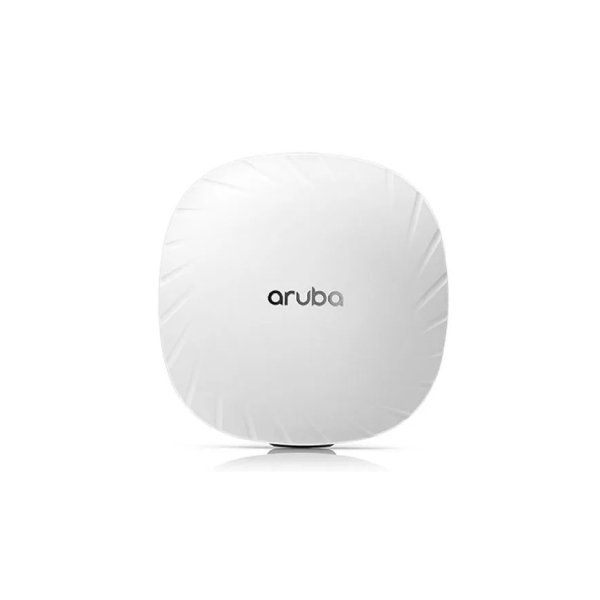
The 550 Series is designed to simultaneously serve multiple clients and traffic types with dual radio (8×8 + 4×4 MIMO) and optional tri-radio mode, boosting overall network performance by up to 4X versus 802.11ac APs.
In addition to the benefits that 802.11ax delivers, the 550 Series provides differentiated capabilities which include AI-powered Wi-Fi RF optimization, always-on connectivity, and WPA3 certified security. Green AP mode offers AI-powered energy savings of up to 70%.
Hardware Variants
- AP-555: Internal antenna models
Wi-Fi Radio Specifications
- AP Type: Indoor, dual/tri-radio, 5GHz and 2.4GHz 802.11ax 4×4 MIMO
- 5GHz Radio (dual-radio): 8SS SU-MIMO up to 4.8Gbps; MU-MIMO with eight 1SS or four 2SS clients
- 5GHz Radio (tri-radio): 4SS SU-MIMO up to 2.4Gbps; MU-MIMO with four 1SS or two 2SS clients
- 2.4GHz Radio: 4SS SU-MIMO up to 1,150Mbps; MU-MIMO with two 2SS clients
- Supports up to 1,024 associated clients per radio (recommended: 200)
- Up to 16 BSSIDs per radio
- Supported Frequency Bands:
- 2.400 – 2.4835GHz (radio 1)
- 5.150 – 5.250GHz (radio 0 and 0L)
- 5.250 – 5.350GHz (radio 0 and 0L)
- 5.470 – 5.725GHz (radio 0 and 0U)
- 5.725 – 5.850GHz (radio 0 and 0U)
- Channel availability depends on regulatory domain
- Dynamic Frequency Selection (DFS) supported
Supported Radio Technologies
- 802.11b: DSSS
- 802.11a/g/n/ac: OFDM
- 802.11ax: OFDMA (up to 37 resource units on 80MHz)*
Supported Modulation Types
- 802.11b: BPSK, QPSK, CCK
- 802.11a/g/n: BPSK, QPSK, 16-QAM, 64-QAM, 256-QAM
- 802.11ac: BPSK to 1024-QAM
- 802.11ax: BPSK to 1024-QAM
High Throughput Support
- 802.11n: HT20/40
- 802.11ac: VHT20/40/80/160
- 802.11ax: HE20/40/80/160
Supported Data Rates (Mbps)
- 802.11b: 1, 2, 5.5, 11
- 802.11a/g: 6, 9, 12, 18, 24, 36, 48, 54
- 802.11n: 6.5 to 600 (MCS0–31), up to 800 with 256-QAM
- 802.11ac: 6.5 to 1,733 (MCS0–9, NSS 1–4), up to 2,166 with 1024-QAM
- 802.11ax (2.4GHz): 3.6 to 1,147 (MCS0–11, NSS 1–4)
- 802.11ax (5GHz): 3.6 to 4,804 (MCS0–11, NSS 1–8)
Advanced Features
- Packet aggregation: A-MPDU, A-MSDU
- Transmit power configurable in 0.5 dBm steps
- Max Transmit Power:
- 2.4GHz: +24 dBm (18 dBm per chain)
- 5GHz: +27 dBm (dual-radio), +24 dBm (tri-radio)
- Note: Antenna gain not included in values above
- Advanced Cellular Coexistence (ACC)
- Maximum Ratio Combining (MRC)
- Cyclic Delay/Shift Diversity (CDD/CSD)
- Space-Time Block Coding (STBC)
- Low-Density Parity Check (LDPC)
- Transmit Beamforming (TxBF)*
- Target Wait Time (TWT)* for low-power clients
- *Future software release required for support
Wi-Fi Antennas
- Integrated downtilt omnidirectional antennas for 4×4 (2.4GHz) with 4.3 dBi peak gain
- 8×8 (5GHz) with 5.8 dBi peak gain
- Tri-radio mode: 4×4 radios — 5.5 dBi (lower 5GHz), 5.6 dBi (upper 5GHz)
- Designed for horizontal ceiling mount; ~30° downtilt
- Mixed horizontal/vertical polarization
- Combined peak gain: 2.4 dBi (2.4GHz), 0.7 dBi (5GHz dual-radio)
- Tri-radio combined gain: 1.1 dBi (5GHz lower), 3.6 dBi (5GHz upper)
Other Interfaces
- E0, E1: HPE SmartRate (RJ-45), up to 5Gbps
- Auto-sensing: 100/1000/2500/5000BASE-T, MDI/MDX
- Supports NBase-T and 802.3bz
- PoE-PD: 48Vdc, 802.3af/at/bt (Class 3+)
- Supports 802.3az Energy Efficient Ethernet
- LACP support for link aggregation
- Can draw power from either or both ports (prioritized or combined)
- DC Power: 48Vdc ±5%, 1.35mm/3.5mm plug, 9.5mm length
- USB 2.0 Host Port: Type A, up to 1A/5W output
- BLE 5.0 & Zigbee (802.15.4)* Radio:
- BLE Tx Power: up to 8 dBm, Sensitivity: -99 dBm
- Zigbee Tx Power: up to 8 dBm, Sensitivity: -97 dBm
- Integrated omnidirectional BLE/Zigbee antennas with ~30° downtilt and 4.5 dBi peak gain
- Visual Indicators: Two multi-color LEDs (System, Radio)
- Reset Button: Factory reset & LED mode control
- Serial Console Interface: Micro-B USB (proprietary)
- Kensington Security Slot