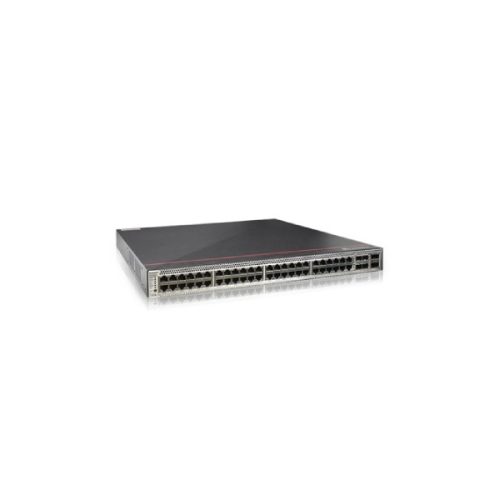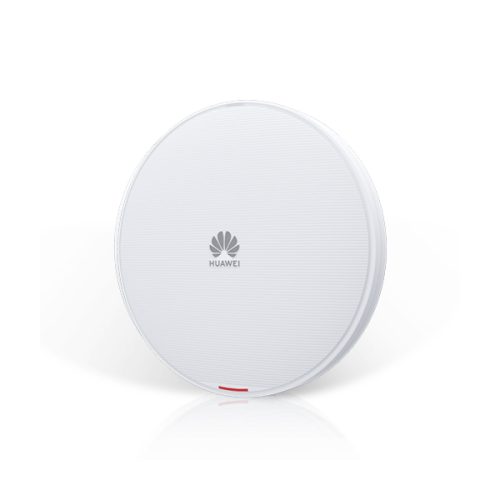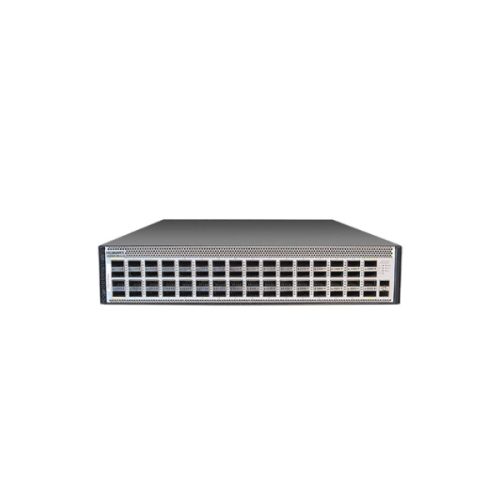
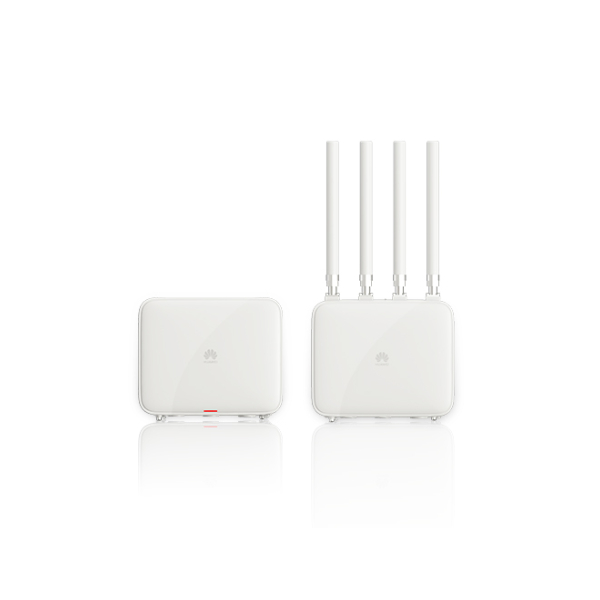
Wi-Fi 6 (802.11ax) standards: As the latest generation Wi-Fi standard by IEEE 802.11, 802.11ax significantly enhances user experience in high-density access scenarios. It supports both 2.4 GHz and 5 GHz frequency bands. Features like MU-MIMO, 1024QAM modulation, OFDMA scheduling, spatial reuse (SR), and target wake time (TWT) help reduce latency, improve transmission efficiency, and extend battery life for STAs.
MU-MIMO: This technology allows the AP to send data to multiple STAs simultaneously, maximizing radio spectrum usage and enhancing user experience, especially in crowded environments.
High-Speed Access: Supporting 160 MHz bandwidth, 1024QAM, and MU-MIMO, the AP can achieve a speed of up to 4.8 Gbps on 5 GHz and up to 5.95 Gbps total, offering ultra-fast connectivity for modern enterprise environments.
High-Level Protection: The APs feature rugged metal shells, waterproof connectors, IP68-rated design, and surge protection up to 6KA. The AirEngine 6760R-51E includes built-in 5KA feeder surge protectors, minimizing installation complexity and cost.
High Density Boost Technology
Huawei integrates advanced solutions like SmartRadio optimization, intelligent DFA, and conflict optimization algorithms to address issues such as access congestion and poor roaming. Load balancing during smart roaming and enhanced EDCA ensures stable connections and efficient bandwidth usage across all APs.
Air Interface Optimization: APs reject weak-signal STAs and disconnect low-rate users, encouraging reconnection to stronger APs. This enhances overall performance and maximizes available air interface capacity.
5GHz-Prior Access: Band steering technology prioritizes the 5 GHz band, reducing interference on the 2.4 GHz band and improving connection quality and speed.
Security Features
Huawei APs integrate both wired and wireless security features including CAPWAP link protection, DTLS/IPsec encryption, and hardware encryption. Supported authentication modes include WPA2-PSK, WPA3-SAE, WPA/WPA2/WPA3-802.1x, and WAPI to ensure safe data transmission and prevent unauthorized access.
Rogue Device Monitoring: Built-in WIDS/WIPS capabilities detect, defend, and manage rogue devices for improved wireless environment security.
Non-Wi-Fi Interference Analysis: APs can identify interference sources such as Bluetooth, microwave ovens, or game controllers. With Huawei NCE-Campus, these can be precisely located and managed effectively.
Automatic Optimization
Radio Calibration: APs automatically scan their surroundings, assess interference, and adjust power/channel settings accordingly. This ensures optimal network performance and reliability.
Application Identification: Huawei APs support smart application control, identifying over 6000 applications to allow real-time traffic policy management. This includes traffic prioritization, blocking, and bandwidth limitation by SSID or user.
Traffic Statistics: Administrators can view per-user and global traffic data to analyze app usage and optimize network performance accordingly.
Cloud-Based Management
Huawei APs can be cloud-managed, eliminating the need for a WLAN AC. With built-in support for PSK, portal, SMS, and social media authentication, cloud management reduces CAPEX and simplifies deployment. Pre-configuration allows plug-and-play setup, while Huawei’s cloud dashboard gives centralized control over network health, AP status, and STA connections.